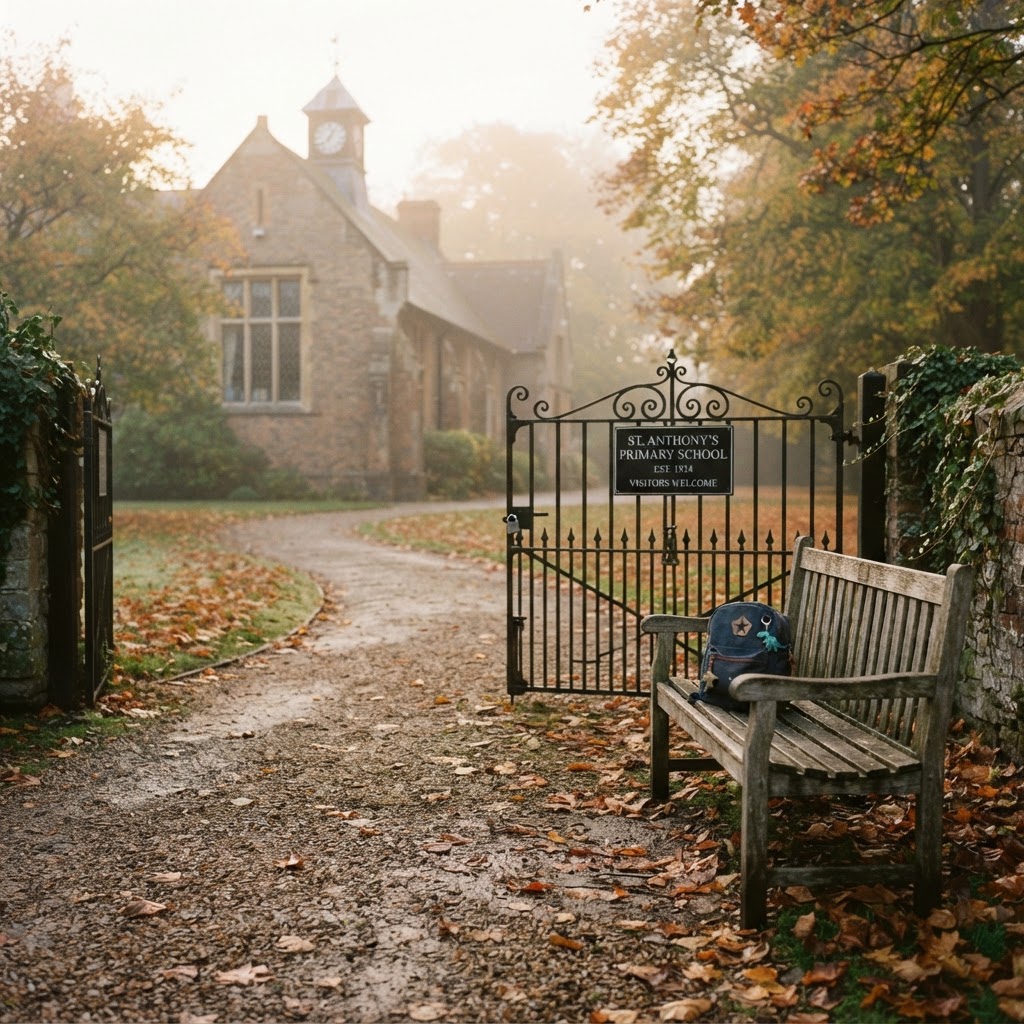
Photography licensed via Unsplash and Scribbledeedo®. All images are curated to align with our children's images policy.
What is school avoidance?
School avoidance — sometimes called school refusal or emotionally-based school avoidance — is when a child finds it persistently difficult to attend school because of emotional distress. It's not truancy: these children are usually at home, often with their parents' knowledge, and they're not avoiding school because they don't care. They're avoiding it because attending feels unbearable.
It's more common than most people realise, and it's rising. The good news is that, with a steady, collaborative approach, most children find their way back. The hard news is that it rarely resolves with a single conversation or a firm push.
What does school avoidance look like?
School avoidance rarely starts as a full refusal. It usually builds:
- Frequent physical complaints — tummy aches, headaches, nausea — on school mornings that vanish at weekends.
- Tearfulness or panic at the school gate, or the night before.
- Partial attendance — arriving late, leaving early, or missing particular lessons.
- Full refusal — the stage most families seek help, by which point the pattern is entrenched.
The earlier it's spotted, the easier it is to shift.
Why is my child avoiding school?
School avoidance is the behaviour; the cause is underneath. Common drivers include:
- Anxiety — separation, social, or performance anxiety, or a general sense of not coping.
- Academic pressure — fear of failure, feeling behind, or an undiagnosed learning need.
- Social difficulties — friendship fallouts, bullying, or feeling excluded.
- Sensory or overwhelm — noisy, busy environments that overload some children.
- Transitions — moving schools, a new teacher, or returning after illness or a break.
Often several of these stack together. The child isn't being difficult; their nervous system has decided school is unsafe.
What doesn't help with school avoidance
Two opposite extremes both tend to backfire:
- Forcing attendance through pressure — dragging a distressed child through the gate may get them in today, but it deepens the alarm and erodes trust.
- Letting avoidance become permanent — the longer a child is out, the harder return becomes, as avoidance feeds on itself.
The middle path — collaborative, gradual, and supportive — is harder but far more effective.
A gentle way through
1. Get curious, not furious
Your child isn't choosing this. Approach with "I want to understand what's hard," not "Why are you doing this?" The avoidance is a symptom; your job is to find the cause, with them.
2. Work with the school early
Don't wait until it's a full refusal. Speak to the teacher, SENCO, or pastoral lead. Good schools are used to this and have plans: reduced timetables, safe spaces, a trusted adult to check in with, modified demands. The earlier the partnership, the better the outcome.
3. Build a gradual bridge back
Rarely does a child return full-time in one leap. Collaborate on small steps: arriving for a favourite lesson first, attending for an hour, coming in through a quieter entrance. Celebrate each step. The goal is momentum, not perfection.
4. Address the underlying cause
If it's academic, seek assessment and support. If it's social, work with the school on friendships and safety. If it's anxiety, consider therapeutic support — your GP can refer. Treat the root, not just the attendance.
5. Keep home steady and connected
Avoidance can turn home into a daily battleground. Protect your relationship. Make space for non-school conversation, creativity, and play. A child needs a safe base to launch from; a war zone keeps them stuck.
When to seek specialist help
If avoidance has lasted more than a few weeks, is escalating, or is affecting your child's mood, sleep, or sense of self, seek professional support. Your GP, the school nurse, and local mental health services (CAMHS in the UK) are the usual routes. You don't have to wait until it's "bad enough" — early help is more effective.
The practical takeaway
School avoidance is a signal, not a choice. Get curious about the cause, partner with the school early, build a gradual bridge back, and treat whatever's underneath — anxiety, academics, social pain. Above all, protect your relationship: a child who feels held at home finds it easier to be brave at school. Slow and steady genuinely wins here.
Try Your Scribbledeedo® Summer Guided Journey
Five playful video lessons for parents and children — free.
Join free